What Causes Cracks In Concrete Troughs & How To Avoid Them

Graham’s Precast Concrete Products Pty Ltd • September 6, 2025

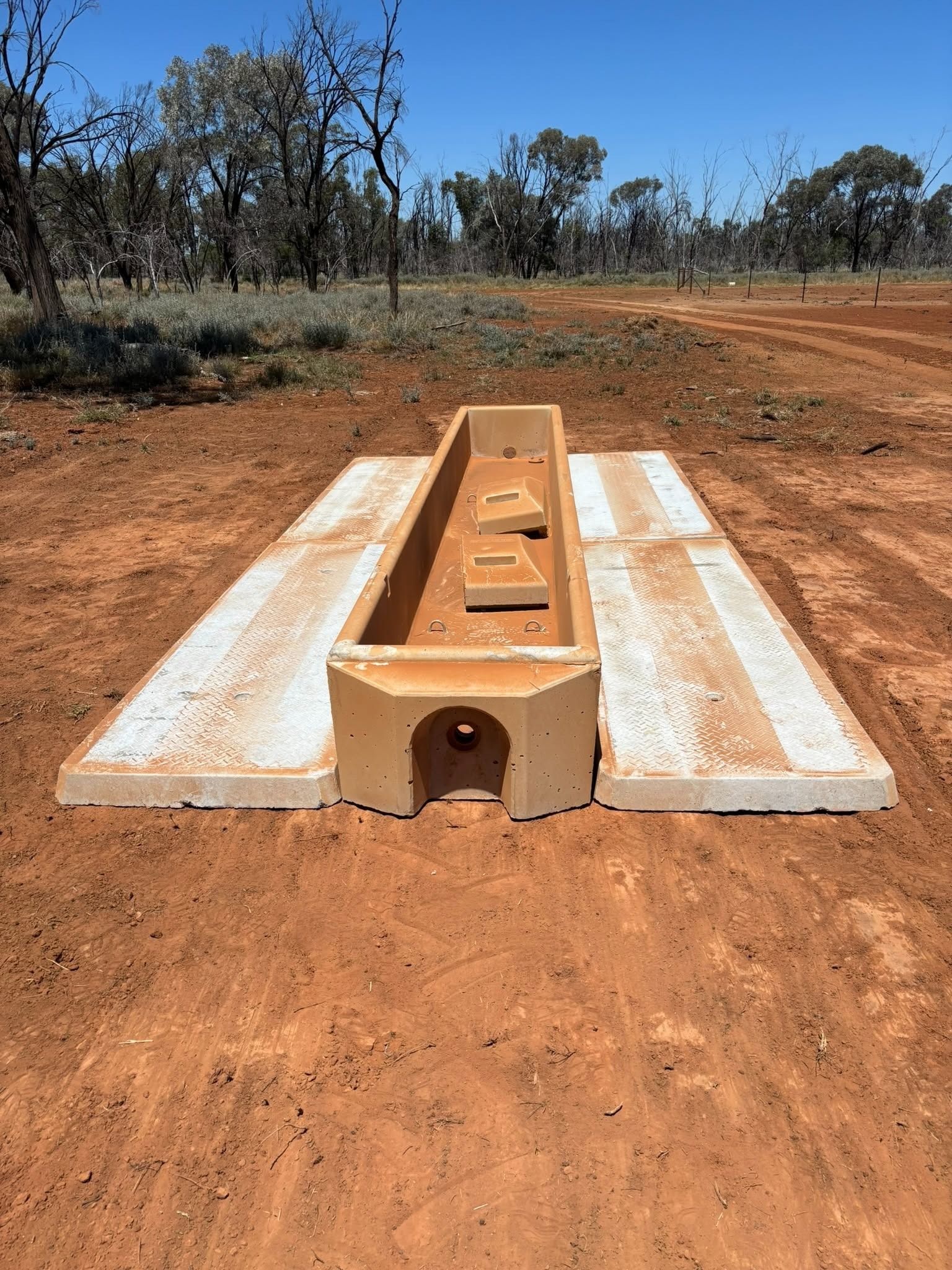
Concrete water troughs are a practical and durable solution for livestock and water storage on rural properties. Their solid construction, long life span, and capacity to endure outdoor environments make them a preferred choice for agricultural settings across NSW and QLD. However, even with their robust build, cracks can develop over time, potentially leading to leaks, compromised strength, and increased maintenance.


Understanding what causes these cracks and how to avoid them is key for property owners and land managers who rely on water troughs to support day-to-day operations. In this blog, we explore the most common reasons concrete water troughs develop cracks and the importance of quality in manufacturing and materials.

Poor Curing Practices

Curing is a crucial stage in concrete production. It involves keeping the concrete moist and at a suitable temperature to allow it to gain strength over time. When concrete is not cured properly, it may dry too quickly, causing shrinkage cracks that weaken the final product.


If a concrete water trough is exposed to rapid evaporation due to heat or wind before curing is complete, microcracks can form on the surface or edges. These cracks may not appear immediately but can expand over time due to internal stress, especially when the trough is repeatedly filled and emptied.

Temperature Fluctuations

In rural and country regions of NSW and QLD, temperatures can vary widely between seasons, or even between day and night. Concrete expands when heated and contracts when cooled. Repeated exposure to these cycles may create internal stress in the structure, particularly if the mix does not accommodate thermal movement.


Without proper reinforcement or allowance for thermal expansion, this stress can lead to visible surface cracks or internal fractures that eventually compromise the integrity of the trough.

Ground Movement or Uneven Support

Concrete troughs must rest on stable, level ground to function properly. If the surface underneath a trough shifts due to soil erosion, ground movement, or subsidence, it may cause uneven pressure points. Over time, this imbalance can lead to cracking, especially on one side or along corners.


Rural environments are particularly prone to this issue, as heavy rains or long dry periods can cause the ground to move, expand, or contract, placing extra strain on concrete products resting on the surface.

Improper Concrete Mix Ratios

The strength and durability of concrete depend heavily on the correct balance of materials—cement, aggregates, water, and any additives. An incorrect mix can compromise the finished product.


Too much water in the mix may lead to excessive shrinkage during drying, while too little can affect the bond between particles. Similarly, using low-quality or poorly graded aggregate may reduce the concrete’s compressive strength, making it more prone to cracking under load or environmental stress.

Inadequate Reinforcement

While not all concrete troughs require steel reinforcement, the absence of suitable internal support in larger units can contribute to cracking, especially under high water pressure or if the trough is moved or impacted.


Reinforcement helps the concrete flex slightly under stress, preventing cracking from sudden load shifts, vibrations, or minor impacts. For larger rural operations with high-capacity troughs, reinforcement is a critical consideration in long-term performance.

Excessive Load or Impact Damage

Concrete troughs are designed to hold water, not to withstand vehicle collisions or be used as impromptu steps or fences. In some cases, cracks are the result of external impact, such as being accidentally bumped by farm machinery or moved using improper techniques.


Dragging a concrete trough or placing it unevenly using heavy equipment can lead to tension within the structure, especially around edges and corners, where the material is most vulnerable.

Freeze-Thaw Cycles (Less Common in Warmer Regions)

While not as common in QLD and northern NSW, regions with cooler climates may see cracks due to freeze-thaw cycles. When water inside the trough or concrete pores freezes, it expands. If this occurs repeatedly, it can lead to surface spalling or deeper internal cracking.


This phenomenon is more likely to affect troughs left unused or partially filled in colder seasons without proper drainage.

How Manufacturing Affects Durability

The manufacturing process plays a significant role in the long-term performance of a concrete trough. High-quality moulding, curing, and material control help prevent structural weaknesses and enhance overall strength.

Precision in Design

Troughs should be designed with appropriate wall thickness, slope angles, drainage channels, and reinforcement points. A well-designed product takes into account both function and structural load-bearing requirements, reducing the chance of stress fractures.

Controlled Curing Environment

Manufacturing facilities that cure their products in a controlled environment are less likely to see issues related to shrinkage or inconsistent strength. Controlled humidity, shade, and temperature help concrete set evenly and gradually—improving durability.

Quality Control of Materials

Sourcing high-grade aggregates, using the correct cement blend, and testing mix ratios ensure that every batch of concrete meets strict performance standards. Reputable manufacturers also perform regular product checks to identify any early signs of defects.

Can Cracks Be Prevented Entirely?

While some degree of surface crazing (fine surface cracking) is considered a normal cosmetic occurrence in concrete, large or structural cracks can—and should—be avoided. Here are a few tips to extend the life of your concrete trough:


  • Choose a trusted manufacturer: Look for suppliers who use precision moulds, consistent curing methods, and industry-compliant materials.
  • Prepare a stable base: Always place your trough on level, compacted ground to avoid pressure points or instability.
  • Avoid movement after installation: Once in place, avoid dragging or shifting the trough, especially when full.
  • Monitor surrounding conditions: Watch for soil erosion, pooling water, or burrowing animals near the installation area.
  • Keep water topped up: Full troughs are more stable and are less affected by temperature changes.


For larger troughs, especially those on expansive rural properties where heavy usage is expected, consider models with reinforcement or thicker wall designs.

Browse Our Range of Concrete Water Troughs in QLD & NSW

Concrete troughs remain one of the most dependable and cost-effective solutions for water storage on rural properties. But like any infrastructure, their long-term performance depends on material quality, proper use, and installation care. By understanding the causes of cracking, such as poor curing, temperature shifts, ground movement, or low-grade materials, property owners can make informed choices that reduce maintenance and prolong durability.


At Graham’s Precast Concrete Products Pty Ltd, we supply high-quality concrete water troughs in NSW and QLD, designed to meet the demands of large-scale rural operations. Manufactured with precision and care, our products are built to endure the challenges of regional properties and deliver dependable performance.

Quality Concrete Grid In QLD And NSW
By Graham’s Precast Concrete Products Pty Ltd February 24, 2026
Learn essential tips for effective cattle grid maintenance to keep your grids safe and functional. Read our expert guide now.
Doable Concrete Septic Systems In QLD And NSW
By Graham’s Precast Concrete Products Pty Ltd October 27, 2025
Discover why concrete septic systems are ideal for high water table areas. Learn their benefits and choose the right system today.
A Trusted Precast Concrete Supplier
By Graham’s Precast Concrete Products Pty Ltd October 27, 2025
Choose a trusted concrete supplier in NSW to ensure quality, compliance and on-time delivery. Learn why reliability matters. Contact us today.
A Quality Concrete Cattle Grids
By Graham’s Precast Concrete Products Pty Ltd September 23, 2025
Boost farm efficiency and sustainability with cattle grids for sale in QLD. Improve access, reduce erosion and enquire today.
A Durable Concrete Water Troughs In QLD
By Graham’s Precast Concrete Products Pty Ltd September 23, 2025
Position concrete water troughs in QLD for maximum efficiency and water savings. Improve livestock access and performance. Learn more today.
A Long Concrete Beam is Sitting in the Middle of a Dirt Field — Graham's Precast Concrete Products Pty Ltd in Kyogle, NSW
September 16, 2024
Learn the essential uses of feeding troughs for livestock, from controlling feed intake to improving hygiene. Read more!
A Metal Fence is Sitting on the Side of a Road — Graham's Precast Concrete Products Pty Ltd in Kyogle, NSW
By Graham’s Precast Concrete Products Pty Ltd September 11, 2024
Discover essential facts about cattle grids, their benefits, and installation tips. Learn how they improve livestock management. Read more now.
A Brown Horse Standing Next to a Concrete Ring in a Field — Graham's Precast Concrete Products Pty Ltd in Kyogle, NSW
By Graham’s Precast Concrete Products Pty Ltd July 10, 2024
Discover the dos and don’ts of using concrete troughs for farm hydration. Learn proper etiquette to ensure long-lasting water systems.
A Septic Tank is Being Built in a Field Next to a River — Graham's Precast Concrete Products Pty Ltd in Kyogle, NSW
By Graham’s Precast Concrete Products Pty Ltd July 10, 2024
Learn essential tips for concrete septic tank protection and preventing root damage. Ensure proper septic tank maintenance today!
A Long Concrete Beam is Sitting in the Middle of a Dirt Field — Graham's Precast Concrete Products Pty Ltd in Kyogle, NSW
By Graham’s Precast Concrete Products Pty Ltd April 25, 2024
Discover the importance of precast concrete feeding troughs. Optimize your farming operations with durable solutions. Read on to learn more!
Show More