Round Vs Long: Which Concrete Water Trough Layout Actually Works Best On A NSW Or QLD Farm?
Choosing between a round and a long concrete water trough isn't a decision most farmers make once and forget. Get it wrong and you're dealing with overcrowding at the waterpoint, wasted laneway space or livestock that simply won't drink efficiently. Farmers sourcing concrete water troughs in NSW understand that shape directly affects how stock behave, how layouts function and how well a setup holds up over years of daily use. The same goes for anyone comparing concrete water troughs in QLD across varied terrain and livestock types.
How Farm Geometry Should Drive Your Trough Decision
Before settling on a shape, it's worth looking at where the trough needs to go and what the surrounding infrastructure looks like. A round trough dropped into a large paddock functions very differently to a long trough running parallel to a fence line or laneway. The physical layout of your property, including how paddocks are divided, where laneways run and how stock move between them, should be the primary driver of which design makes sense.
It’s worth considering these factors before you decide:
- Whether the waterpoint sits in an open paddock, a yard or a narrow laneway with fencing on both sides.
- How many animals will be accessing the trough at any given time and from which directions.
- Whether the trough needs to serve stock from two paddocks simultaneously via a fence split.
Getting this geometry right from the outset saves a significant amount of retrofitting later.
Where Long Troughs Outperform Round Ones
Long troughs are particularly well suited to laneways, fence lines and situations where large numbers of stock need to access water without bottlenecking. Positioning a long trough along a fence allows animals to drink from both sides simultaneously, reducing competition and spreading the load across a greater length of drinking space.
The practical advantages in these settings are worth understanding:
- The extended drinking edge means more animals can access water at once, reducing aggressive competition in large mobs.
- Dual float cover lids protect the water supply mechanism and allow servicing without disrupting stock access.
- Placement along a fence line keeps the trough out of the main paddock area, preserving usable grazing space.
For properties with defined movement corridors between paddocks, long troughs work with the infrastructure rather than against it.
Where Round Troughs Make More Practical Sense
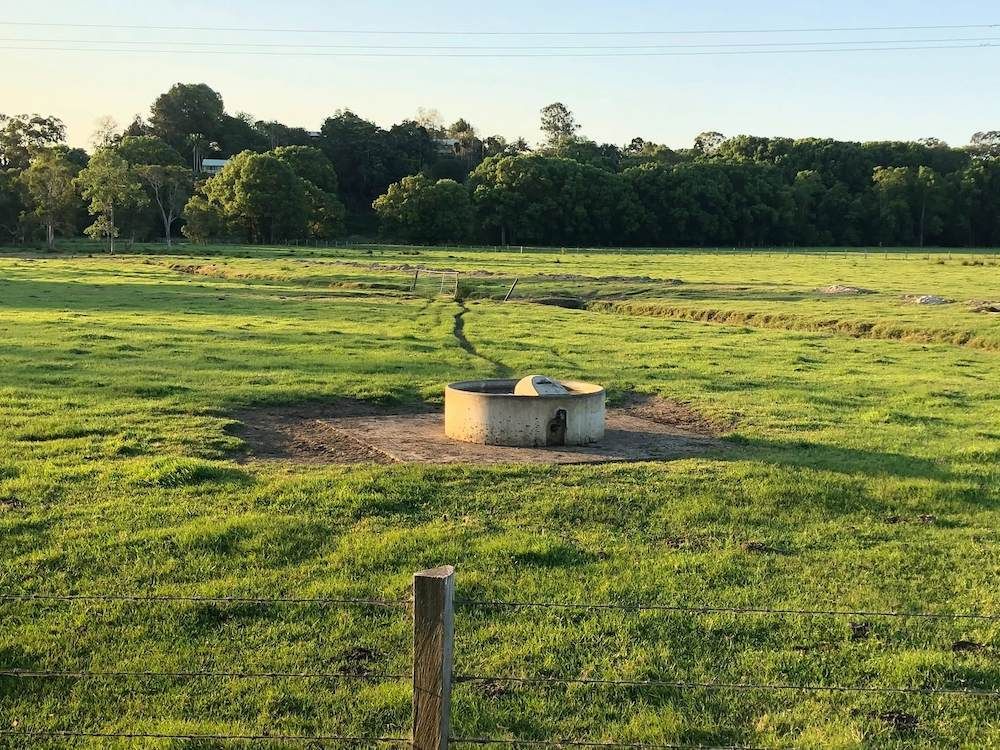
Round troughs come into their own in yards, smaller paddocks and situations where stock approach the waterpoint from multiple directions. Their shape allows animals to spread around the circumference naturally, distributing access evenly without requiring a specific approach angle. For horse properties and lower-density paddocks, a round trough placed centrally often results in calmer, more organised watering behaviour.
Round troughs tend to be the stronger choice when:
- Animals move in all directions and a linear trough would create a pinch point in yards or handling areas.
- Horses are involved, as they tend to drink individually or in small groups and benefit from the open design.
- The trough serves a smaller number of animals spread across a larger open area.
The round design's versatility in open settings is a genuine practical advantage when the layout suits it.
Protective Rings on Large Round Troughs
On cattle properties, managing what happens when large animals crowd the waterpoint is an important design consideration. Cattle will lean into a trough, and without adequate protection, this pressure can damage the trough edge over time. On larger round troughs, protective rings built around the outside keep cattle at an appropriate distance while still allowing comfortable drinking access.
This matters for several reasons:
- Protective rings reduce the physical pressure applied to the trough rim by large animals leaning in.
- They help manage dominant animal behaviour, preventing one or two cattle from monopolising the waterpoint.
- The float mechanism is better protected when animals can't position themselves directly over the centre of the trough.
For anyone running cattle on larger rural blocks, this is a design detail worth looking for when comparing options.
Why Trough Height Matters More Than Most Farmers Expect
Trough height is one of the most commonly overlooked specifications, and it matters most for sheep. A trough built to cattle height creates a genuine access problem for smaller animals, particularly lambs. Sheep troughs are designed with a lower profile to ensure the entire mob can drink comfortably, directly affecting how evenly stock are watered across a large flock.
Getting height right has real consequences on the ground:
- Lambs and smaller animals can access water without difficulty, reducing the risk of younger stock being pushed out.
- A lower profile encourages consistent drinking behaviour across the whole flock rather than only the larger animals.
- Correctly specified height reduces physical wear on animals that would otherwise need to stretch awkwardly to drink.
This is a straightforward specification detail with a meaningful effect on animal welfare and day-to-day flock management.
Fence Splits & Dual-Paddock Watering
One of the more efficient uses of a long trough is positioning it along a shared fence line to water two paddocks simultaneously. This reduces the number of troughs needed across the property and simplifies water supply infrastructure without compromising access for either mob.
Here are some key considerations for fence split installations:
- The trough needs to be positioned so the fence line integration is structurally sound on both sides.
- Water demand from both paddocks needs to be factored into the float and supply specification to keep up during peak periods.
- Long troughs with dual float cover lids suit this application well, as each side can be managed independently if needed.
For properties running stock across multiple paddocks, this approach offers a practical reduction in infrastructure cost and complexity.
Getting the Specification Right Before You Order
Selecting the right shape is only part of the decision. Dimensions, height, float configuration and placement all need to align with how the property actually operates. Whether you're looking at concrete water troughs in NSW or concrete water troughs in QLD, conditions, livestock types and infrastructure vary significantly from one property to the next, and a one-size-fits-all recommendation rarely serves anyone well.
A trough correctly specified for the layout and stock type will:
- Perform consistently over a longer service life with minimal intervention required.
- Reduce the behavioural issues that arise when animals compete for limited drinking access.
- Integrate cleanly with existing fencing, laneways and water supply infrastructure.
Taking the time to get the specification right before ordering avoids the cost and disruption of repositioning a trough that doesn't suit the setup.
Talk to Graham's About Your Property Layout
Graham’s Precast Concrete Products Pty Ltd works with farmers running large rural properties and understands that the right trough design depends on specifics that a general recommendation can't account for. Whether you're managing a laneway system, open paddocks or a mixed livestock operation, the conversation always starts with how your property functions day to day. Concrete water troughs in NSW and concrete water troughs in QLD need to work with your livestock, your infrastructure and your layout from day one. Get in touch with our team and let's work out which design suits your setup.